
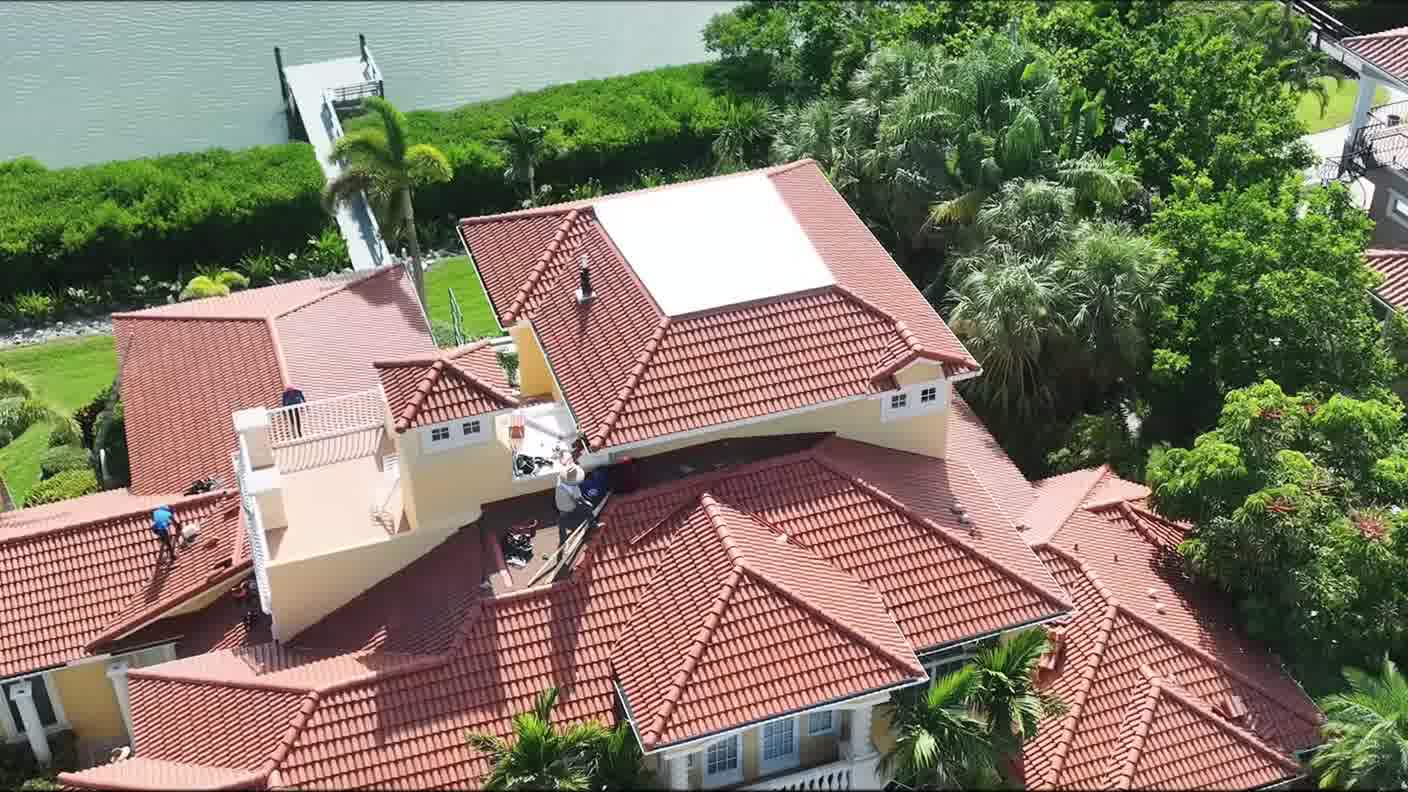
Storm damage
Roof Tarping After a Storm
A tarp is temporary protection that buys time for a proper repair. It is not a repair, it does not stop a claim being assessed, and a tarp put on badly can do more damage than the hole it covers. This page explains how it should be done and what to record first.
Limited time offer 4 point home inspection or wind mitigation with any new roof See what is includedA roof tarp is temporary protection, not a repair. Secured properly it keeps water out until the roof can be worked on. Before anything is covered, photograph the damage, because once a tarp is on, the evidence of what the damage looked like is underneath it.
Tarping comes up at the worst possible moment, usually with water already inside. The order of operations matters, and the first step is not the tarp.
What does a roof tarp actually do?
It keeps water out of an opening until that opening can be repaired properly. That is the whole job.
It does not restore the roof, it does not stop the damage underneath progressing, and it does not make the repair less urgent. Water that has already reached the decking keeps doing what it does whether or not there is a tarp above it.
A tarp is a clock, not a solution. It buys weeks, not seasons.
What should I photograph before the tarp goes on?
Everything, and this is the step people skip and regret.
Photograph the damage on the roof if it can be seen safely from the ground or from a window. Photograph the water inside, the stain, the ceiling, the ruined contents, and the room as a whole so the pictures can be placed later. Get the date on them if your phone does that.
An insurance claim is decided on evidence of what the damage was before anybody intervened. Once the tarp is on and the floor is mopped, that evidence does not exist. Fourteen years of claim work says this is the single most valuable ten minutes you will spend.
How should a tarp be secured?
Fastened down, not weighted down. A tarp held in place with timber, blocks or sandbags becomes a sail in the next squall, and a tarp that lifts takes covering with it and leaves a larger opening than it started with.
It should run up and over the ridge where the damage allows, so water running down the slope goes over the tarp rather than under its top edge. A tarp that stops partway up a slope channels water underneath itself.
Edges get sealed and fastened into sound material, not into the damaged area. Fastening a tarp into compromised decking is fastening it to nothing.
Can I tarp my own roof?
We would rather you did not, and this is not us protecting the work.
A wet roof is slippery, a damaged roof has soft areas that are not visible from above, and wind is usually still moving when people decide to go up. More people are hurt inspecting and covering storm damage than by the storm itself.
If water is coming in now and you can reduce it from inside safely, do that. Move what can be moved, contain what can be contained, and switch off the breaker for any room where water is near a light fitting, a fan or an outlet.
How long can a tarp stay on?
Less time than people assume. Sun degrades the material, wind works at the fastenings, and every week it stays on is a week the damage underneath is not being addressed.
If a tarp has been on a roof for months, the question is no longer whether the tarp is holding. It is what has been happening under it.
We have opened roofs tarped after a storm and found decking that had been quietly taking water the whole time through an area the tarp never covered.
What happens after the tarp?
The roof gets assessed properly: what the damage actually is, how far it extends beyond the visible opening, and whether the answer is a repair or a replacement.
If it is genuinely a repair, we will say so. We will not sell you a roof you do not need because a storm gave us the opening to.
If a claim is involved, the documentation from the tarping stage is what the assessment rests on, which is why the photographs come first.
If water is coming in right now, call. Monday to Saturday, eight until six, we respond the same day.
Want this looked at on your own home?
Let our experts look over your property. No cost and no obligation.